
Protecting People, Equipment, and the Environment
Industrial drilling chemicals are essential to the success of oil and gas operations, supporting everything from drilling efficiency and wellbore stability to corrosion protection and production optimization. However, these chemicals can present significant health, safety, and environmental risks if they are not properly stored, handled, and transported.
Implementing best practices throughout the chemical management process not only protects personnel and the environment but also ensures regulatory compliance, minimizes operational downtime, and extends the lifespan of valuable equipment.
Whether chemicals are stored in warehouses, transported to remote drilling locations, or used on-site, safety should always be the top priority.
Why Proper Chemical Management Matters
Every industrial chemical possesses unique physical and chemical properties. Some may be corrosive, flammable, toxic, oxidizing, or environmentally hazardous. Improper handling can result in:
- Workplace injuries
- Chemical spills and leaks
- Environmental contamination
- Equipment damage
- Regulatory penalties
- Production delays
- Financial losses
A comprehensive chemical management system significantly reduces these risks while promoting operational excellence.
Best Practices for Chemical Storage
Proper storage begins with understanding the characteristics of each chemical product. Storage facilities should be designed to protect chemicals from environmental conditions while preventing accidental releases.
1. Store Chemicals in Designated Areas
Drilling chemicals should only be stored in designated storage facilities specifically designed for hazardous or industrial chemicals. These areas should be secure, well-ventilated, dry, and protected from direct sunlight, excessive heat, and moisture.
Storage areas should also have restricted access to authorized personnel only.
2. Maintain Proper Temperature Conditions
Extreme temperatures can alter the chemical properties of many products. Always follow the manufacturer’s recommended storage temperature to preserve product quality and effectiveness.
Proper temperature control also reduces the risk of chemical degradation and pressure buildup inside containers.
3. Segregate Incompatible Chemicals
Certain chemicals should never be stored together. Mixing incompatible substances may cause dangerous chemical reactions, fires, toxic gas release, or explosions.
Examples include:
- Acids separated from alkalis
- Oxidizers stored away from flammable materials
- Corrosive chemicals isolated from reactive metals
- Organic chemicals separated from strong oxidizing agents
Proper segregation should be supported by clear storage procedures and hazard identification.
4. Use Appropriate Secondary Containment
Secondary containment systems such as bund walls, spill pallets, and containment trays help prevent chemical spills from spreading into surrounding areas.
Containment systems should be capable of holding the volume of the largest stored container in case of leakage.
Safe Handling Procedures
Handling industrial drilling chemicals requires trained personnel and standardized operating procedures.
1. Read Safety Documentation
Before handling any chemical, workers should review:
- Safety Data Sheets (SDS)
- Technical Data Sheets (TDS)
- Product labels
- Handling instructions
These documents provide essential information regarding hazards, storage, emergency response, and safe handling practices.
2. Wear Appropriate Personal Protective Equipment (PPE)
The required PPE depends on the chemical being handled but may include:
- Chemical-resistant gloves
- Safety goggles or face shields
- Protective coveralls
- Safety boots
- Respiratory protection where necessary
- Chemical-resistant aprons
Proper PPE significantly reduces exposure to hazardous substances.
3. Follow Safe Transfer Procedures
Chemical transfer operations should be carefully controlled to avoid spills and contamination.
Always:
- Use compatible pumps and transfer equipment.
- Inspect hoses and fittings before use.
- Ground and bond equipment where required.
- Avoid overfilling containers.
- Monitor transfers continuously.
Never leave chemical transfer operations unattended.
Proper Labeling and Hazard Communication
Every chemical container should be clearly labeled with:
- Product name
- Hazard symbols
- Manufacturer information
- Batch number
- Emergency contact details
- Storage requirements
Clear labeling enables employees to identify hazards quickly and respond appropriately during routine operations or emergencies.
Hazard communication programs should also include employee training and readily available Safety Data Sheets (SDS).
Safe Transportation of Drilling Chemicals
Transportation is one of the most critical stages of chemical management. Poor transport practices increase the risk of spills, accidents, and environmental damage.
Best Transportation Practices
- Inspect containers before loading.
- Secure all drums, IBC tanks, and containers to prevent movement.
- Use approved vehicles designed for chemical transport.
- Ensure proper hazard placards and transport documentation are available.
- Train drivers in hazardous material handling and emergency procedures.
- Avoid transporting incompatible chemicals together.
- Conduct routine vehicle inspections before every journey.
Reliable transportation ensures chemicals arrive safely while maintaining product integrity.
Spill Prevention and Emergency Response
Despite preventive measures, spills can still occur. Every facility should maintain a comprehensive spill response plan.
Emergency preparedness should include:
- Spill kits positioned near storage areas
- Emergency showers and eyewash stations
- Clearly defined evacuation procedures
- Incident reporting systems
- Trained emergency response personnel
- Environmental containment equipment
Quick response minimizes environmental impact and protects personnel.
Environmental Responsibility
Responsible chemical management extends beyond workplace safety. Companies should adopt environmentally sustainable practices such as:
- Preventing leaks and spills
- Proper disposal of chemical waste
- Recycling suitable containers
- Using environmentally friendly chemical alternatives where possible
- Regular environmental monitoring
- Compliance with local and international environmental regulations
Environmental stewardship strengthens corporate reputation while supporting sustainable operations.
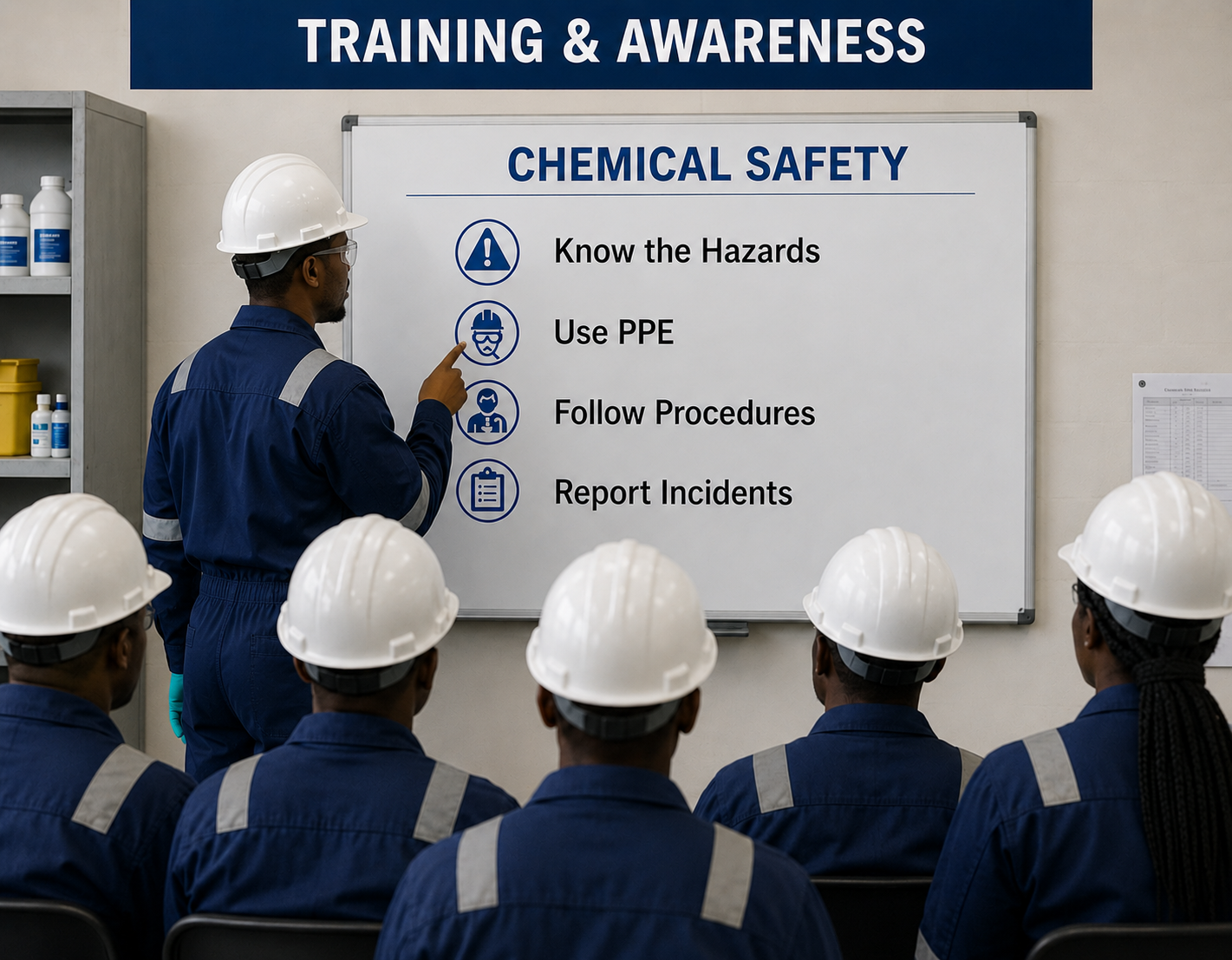
Employee Training Makes the Difference
Even the best safety procedures are ineffective without properly trained personnel.
Regular training should cover:
- Chemical hazard awareness
- PPE usage
- Safe handling techniques
- Spill response
- Fire prevention
- First aid procedures
- Emergency evacuation
- Regulatory compliance
Continuous training helps build a strong safety culture throughout the organization.
Benefits of Proper Chemical Management
Implementing industry best practices delivers significant operational advantages, including:
- Improved workplace safety
- Reduced environmental risks
- Lower accident rates
- Better regulatory compliance
- Extended equipment lifespan
- Reduced operational downtime
- Lower maintenance costs
- Increased operational efficiency
- Improved customer confidence
Safe chemical management is an investment that protects both people and business performance.
Conclusion
Safe storage, handling, and transportation of industrial drilling chemicals are fundamental to successful oil and gas operations. Every stage—from warehouse storage and product handling to transportation and final application—requires careful planning, trained personnel, and strict adherence to safety procedures.
Organizations that prioritize chemical safety not only protect their workforce and the environment but also improve operational reliability, reduce costs, and strengthen their reputation within the industry.
Partner with a Trusted Chemical Supply Company
At Yumek Energy, we understand that supplying industrial drilling chemicals goes beyond delivering products. We are committed to providing high-quality chemical solutions supported by safe packaging, reliable logistics, regulatory compliance, and technical expertise. Our goal is to ensure that every product reaches your facility safely and performs to the highest industry standards.
Whether you require drilling chemicals, production chemicals, specialty additives, or industrial cleaning solutions, our experienced team is ready to support your operations with dependable service and professional guidance.